Ebola in the DRC: Africa CDC’s Yap Boum on the Response, Vaccine Research and Lessons for Future Outbreaks
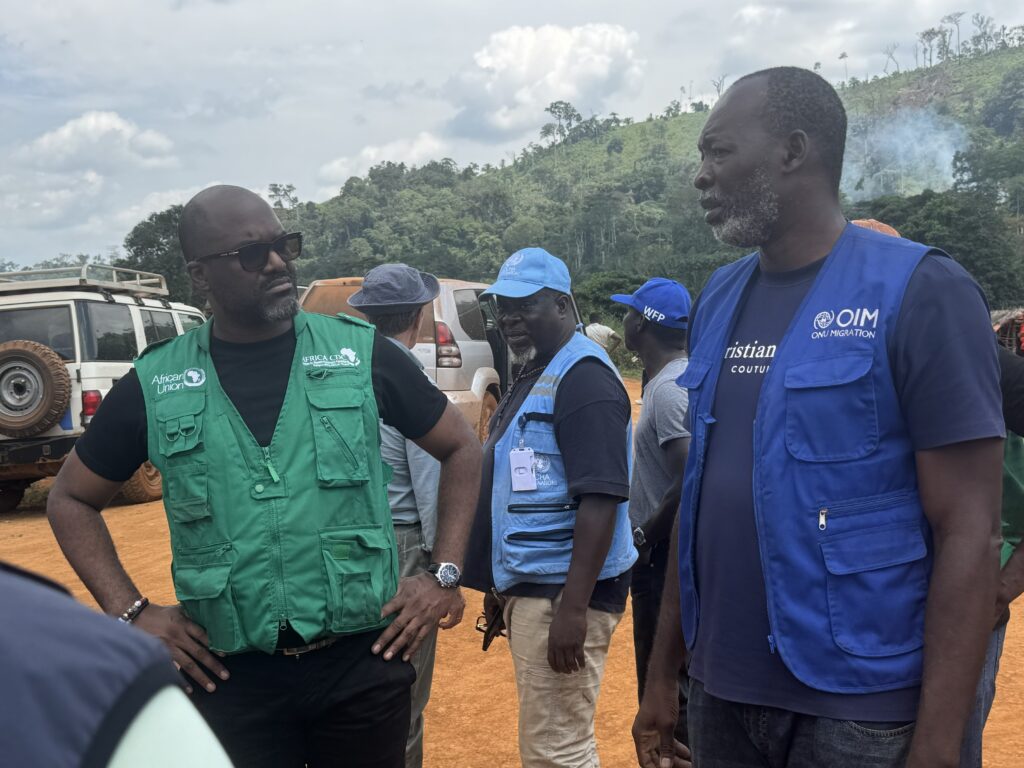
Professor Yap Boum II during a field visit in the Democratic Republic of the Congo as part of the response to the current Bundibugyo Ebola virus outbreak. Photo courtesy of Yap Boum.
Ebola in the DRC: Africa CDC’s Yap Boum on the Response, Vaccine Research and Lessons for Future Outbreaks
TAMPA, FL, USA (September 24, 2026) – The Ebola outbreak caused by the Bundibugyo virus continues to pose a major public health challenge in the Democratic Republic of the Congo (DRC). As of September 21, the DRC Ministry of Public Health, Hygiene and Social Welfare reported 7,773 confirmed cases and 3,759 deaths.
In this edited interview conducted in mid-September, Global Virus Network’s Nora Samaranayake spoke with Professor Yap Boum II of Africa CDC to discuss the response to the Ebola outbreak in the DRC, vaccine research, community engagement, and lessons for future outbreaks.
Professor Yap Boum II, PhD, MPH, MBA
Head of the Emergency Preparedness and Response Division, Africa CDC
Deputy Incident Manager, Ebola Bundibugyo Continental Incident Management Support Team (IMST)
Where does the Ebola outbreak stand now, and what concerns you most?
We are seeing significant progress, but the situation varies considerably from one province to another.
The government recently reported that the outbreak had passed its peak and was under control. We acknowledge the improvement, particularly in Ituri, where cases and deaths have declined by more than 30% over the past three weeks.
But North Kivu tells a different story. Cases have increased by approximately 40% over the same period. Security is a major obstacle. Only about 30% of the province is under government administration, making it difficult to expand the response. Challenges with community engagement are also contributing to a high case-fatality ratio.
We are also concerned about the outbreak spreading into additional provinces. One patient who unfortunately died had traveled through several health zones and provinces, including North Kivu and Ituri. He was detected in Bulu Health Zone, in the South Ubangi Province neighboring the Central African Republic, after developing symptoms, and a safe and dignified burial was carried out. But his movements illustrate how easily the virus could spread.
We have made progress, but I believe it is too early to say the outbreak is anywhere near “under control”.
More than 100 days into the outbreak, what have you learned about what works? You have also expressed frustration that response teams are not always acting on community feedback.
We have learned that we need to listen much more closely to communities. People in a village know what is happening. They know when someone has died, which families have experienced symptoms, or whether a visitor has arrived from another area, especially if they have any symptoms.
That is why we have shifted toward a village-centered response, giving village chiefs greater leadership in the response. Each chief can designate a community health worker or another local representative to report deaths and other alerts and help address community concerns. These representatives receive approximately $150 per month.
We also must remember that people had health needs long before Ebola arrived. Women still need safe deliveries. Routine vaccinations must continue. Communities affected by humanitarian crises still need support.
One major challenge is that we receive valuable feedback from communities and colleagues who study the cultural and social factors affecting the response, but we do not always act on it. We cannot expect people to abandon practices they have followed all their lives simply because an outbreak response team arrives. We need to adapt our approach while staying grounded in science and protecting public health.
Burial practices are one example. We need safe and dignified burials, but we also need to understand how communities traditionally care for someone who has died. We have recommended training community members to take a more active role, with response teams providing supervision.
We already have much of the information we need. The challenge is putting those recommendations into practice.
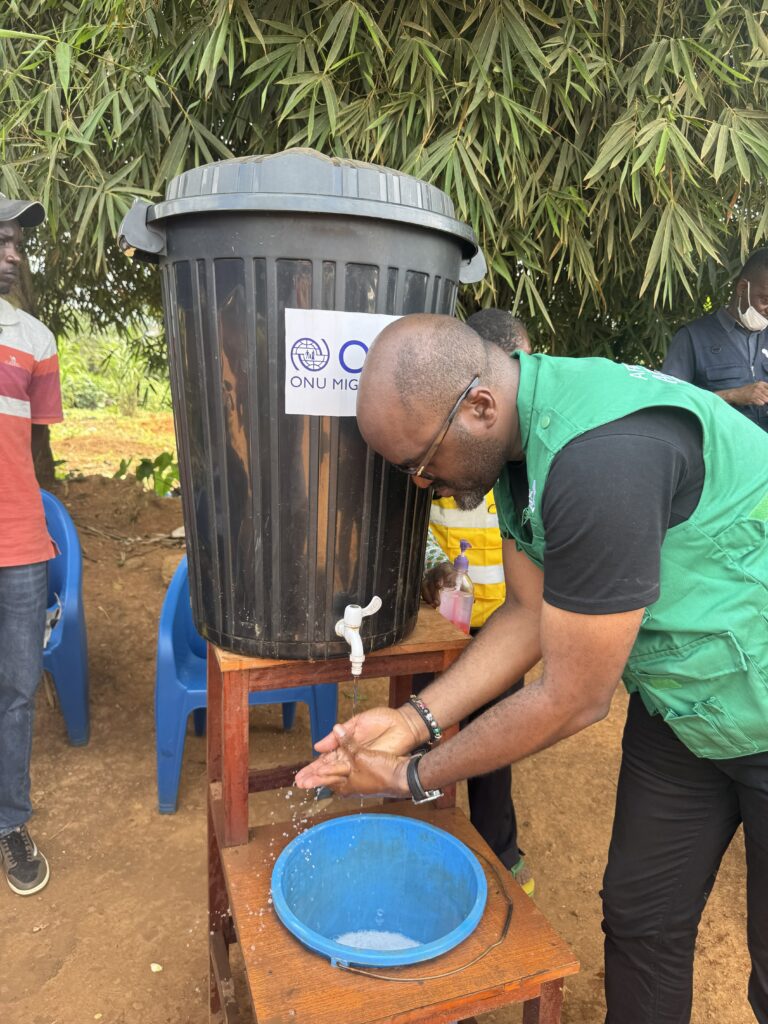
Professor Yap Boum II demonstrates handwashing during a field visit as part of the response to the current Bundibugyo Ebola virus outbreak in the Democratic Republic of the Congo. Photo courtesy of Yap Boum.
The current outbreak is caused by Bundibugyo virus, but the licensed Ebola vaccine, Ervebo, was developed against Zaire ebolavirus. What is the vaccination strategy, and what do you hope to learn from the BRAVO study and other planned clinical trials?
For Ervebo, there are two separate and different approaches to its use in the Ebola response: compassionate-use vaccination and vaccination as part of a clinical trial to assess efficacy in preventing Bundibugyo infection.
Ervebo has been made available to frontline workers through compassionate-use vaccination, but we still need evidence about whether it provides protection against Bundibugyo virus.
The BRAVO study, conducted with Africa CDC, WHO, Médecins Sans Frontières and other partners, launched on September 19. It will follow 20,000 frontline workers in Ituri and North Kivu over nine to 12 months to assess whether Ervebo provides protection against Bundibugyo virus.
This work is also expected to lay the groundwork for a larger, multisite randomized trial evaluating several vaccine candidates, including mRNA vaccines and a candidate from MSD (Merck & Co.).
We are trying to protect people at risk while generating the evidence needed to guide vaccination decisions.
The EBO-PEP trial, supported by ALIMA, is studying whether a preventive intervention can protect people at high risk of Ebola infection. What are you learning so far?
The EBO-PEP trial evaluates the experimental antiviral obeldesivir as post-exposure prophylaxis (PEP) to prevent disease caused by the Bundibugyo ebolavirus in high-risk individuals. Interest in the study is encouraging, but we need to be careful. The formal data are not yet available, and I do not have efficacy figures to share.
Recruitment was difficult at the beginning, but it has improved. The study is also strengthening the wider response, including surveillance and follow-up of people who have been in contact with infected patients. Colleagues are eagerly awaiting the results, as a positive result could provide an important biomedical countermeasure in our efforts to control transmission of the virus.
What needs to happen now, and how can African institutions and international organizations such as the Global Virus Network (GVN) help?
We need to expand the measures that are producing results in Ituri, particularly rapid diagnostic testing, isolation capacity, and safe and dignified burial practices. The situation in North Kivu is more complex, but we need to roll out those services to affected communities in this province despite the political instability and military conflict in this province.
International organizations can help by communicating clearly that this remains a complex outbreak and that response efforts need to intensify. The Global Virus Network, for example, can play an important role in bringing together experts and communicating scientific and public health challenges to a wider audience, as we did together during the Ebola press conference hosted by GVN in June.
Governments and organizations that have pledged support for the Ebola response in the DRC need to honor those commitments and provide urgently needed resources to make a difference in the field. A pledge alone does not help a health worker, a laboratory, or a community. The resources must be disbursed and put to work.
My hope is that, over the next four weeks, we will begin to see in North Kivu the progress in terms of case detection and contact tracing that we are already seeing in Ituri.
If there is one lesson you want the global health community to take from this outbreak, what would it be?
We must strengthen health systems while responding to outbreaks.
There were 16 previous Ebola outbreaks in the DRC before this one. But when this outbreak began, we still lacked the laboratory and treatment capacity we needed in some areas. We cannot keep rebuilding the Ebola response from scratch each time.
Instead of relying entirely on temporary tents, for example, we should establish long-term treatment facilities available for the next Ebola epidemic in eastern DRC. We have set up 22 laboratories during this response. We need to preserve and expand that capacity so it is available for the next outbreak.
We also need to digitize disease surveillance. We should not be waiting three or four months to detect an outbreak. We need to build stronger surveillance with adequate resources for an early warning system, so that the next Ebola epidemic is identified and reported within days.
The DRC is an enormous country. Its geography and security challenges make outbreak response extremely complex. And because Ebola is a zoonotic disease, meaning it can pass from animals to humans, we know future outbreaks are almost inevitable.
Every response should leave the health system better prepared than it was before.
Media Contact:
Nora Samaranayake
Global Virus Network
About the Global Virus Network
The Global Virus Network (GVN) is a worldwide coalition comprising 90+ Virology Centers of Excellence and Affiliates across 40+ countries, whose mission is to facilitate pandemic preparedness against viral pathogens and diseases that threaten public health globally. GVN advances knowledge of viruses through (i) data-driven research and solutions, (ii) fostering the next generation of virology leaders, and (iii) enhancing global resources for readiness and response to emerging viral threats. GVN provides the essential expertise required to discover and diagnose viruses that threaten public health, understand how such viruses spread illnesses, and facilitate the development of diagnostics, therapies, and treatments to combat them. GVN coordinates and collaborates with local, national, and international scientific institutions and government agencies to provide real-time virus informatics, surveillance, and response resources and strategies. GVN's pandemic preparedness mission is achieved by focusing on Education & Training, Qualitative & Quantitative Research, and Global Health Strategies & Solutions. The GVN is a non-profit 501(c)(3) organization. For more information, please visit www.gvn.org.